
Reaching the failed joint
Siding, masonry joints and adjoining covering can need careful opening to reach the connection. The scope must include restoring what is disturbed.
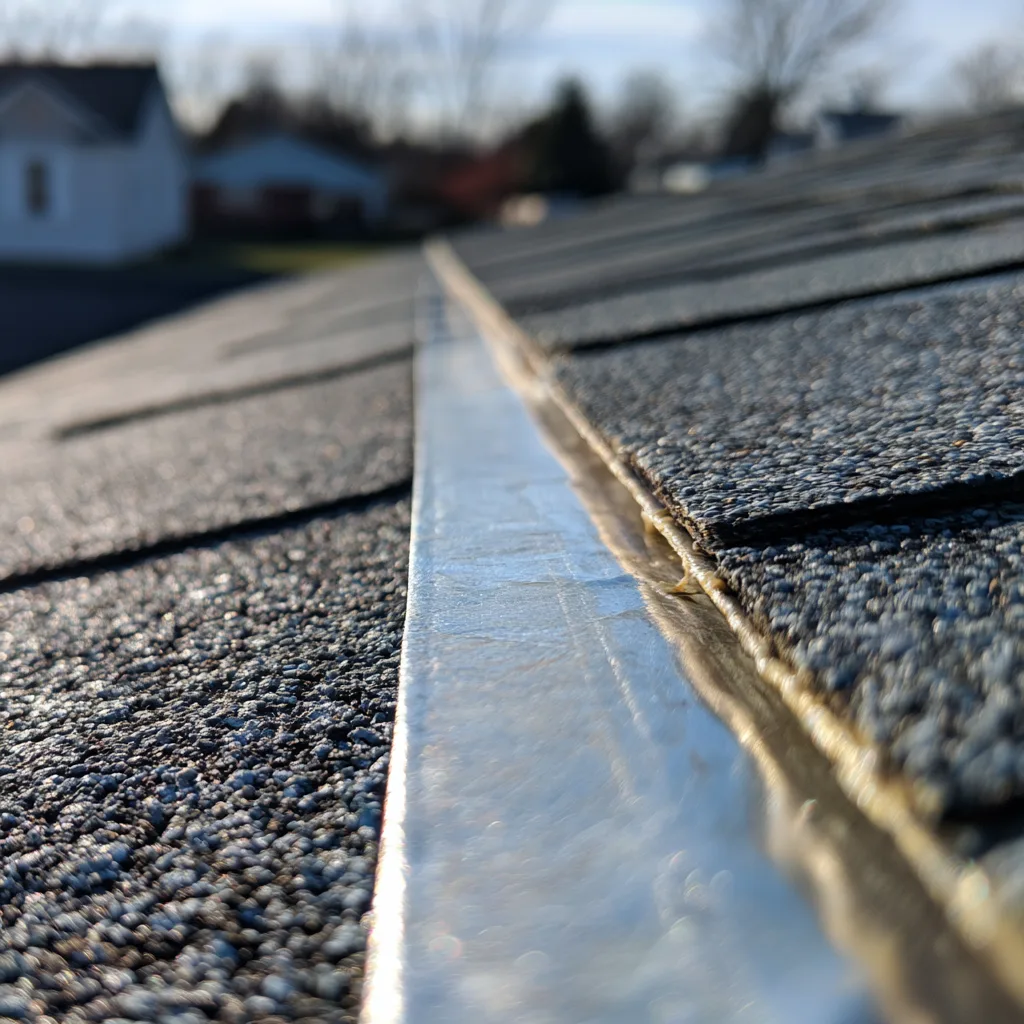
A clear scope starts with the roof in front of us.
Leaks at a wall, chimney or roof penetration need a connection that moves water back onto the roof. Flashing repair restores that path.
Flashing is the shaped material that protects roof joints and transitions. At a sloped roof beside a wall, step flashing works with successive shingle courses. Counterflashing or the wall’s drainage layers protect the top of that joint. At its lower end, kick-out flashing helps direct water into the gutter instead of behind the wall.
A failed joint can let rain behind the roof covering even while the shingles look intact. Repair needs to establish how the roof and wall layers overlap and where the water should leave the detail. Access behind siding or a chimney detail can make it a larger job than it first appears.

The repair follows the shape and purpose of the connection.
| Transition | Water-shedding job |
|---|---|
| Roof beside a wall | Step flashing returns water from the wall joint to each shingle course. Wall layers need to drain over it. |
| Chimney or masonry wall | The base and counterflashing must work together, with the surrounding roofing integrated around the feature. |
| Pipe or vent | A suitable boot or flashing seals around the penetration and overlaps correctly with the roof covering. |
| Valley | The detail carries runoff from connected slopes without exposing a seam or attachment to an unintended water path. |
Repairing the detail can involve more than the metal visible above the shingles.
Siding, masonry joints and adjoining covering can need careful opening to reach the connection. The scope must include restoring what is disturbed.
Water behind the joint can damage wood beneath it. Sound support is needed before the new detail is closed.
The repair uses materials and overlaps appropriate to the roof and wall. Sealant belongs in its intended joint, not as a substitute for missing flashing.
Yes. The roof-to-wall or penetration connection can fail separately from the broad shingle field.
Sealant can be part of a compatible detail. It does not fix missing step flashing, a reversed overlap or damaged support.
Yes. Tear-off gives access to connections that new shingles alone would leave hidden. See the complete roof replacement scope
Tell us about the chimney, wall or penetration near the leak. A free inspection can start the repair discussion.