
Why a Flat Roof Leak Can Be a Drainage Problem
A low-slope roof depends on a working path to its drains, scuppers or edges. A leak near standing water needs both the roofing connection and the drainage condition considered.
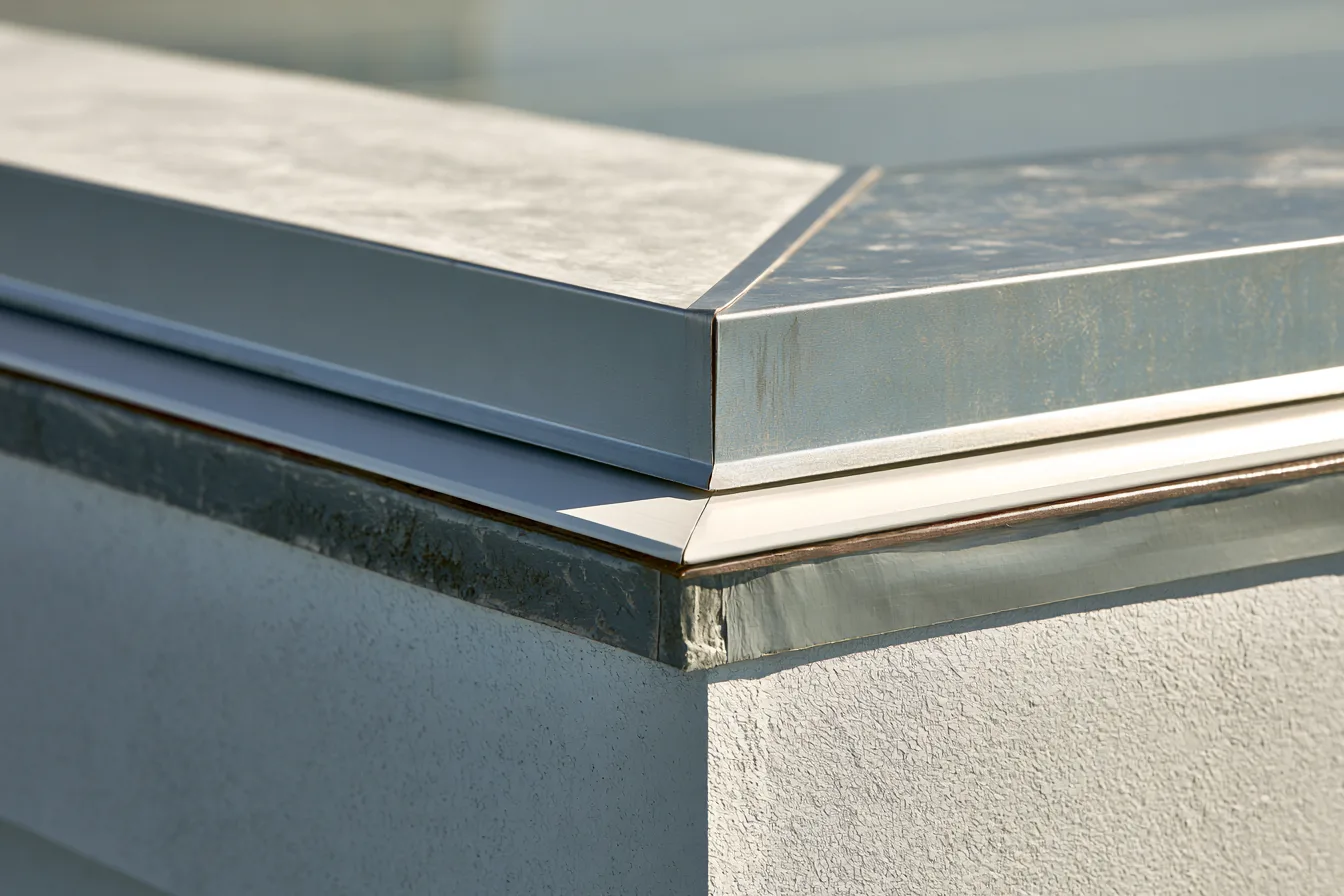
Drainage Changes the Water Load
Water is intended to leave a low-slope roof through a planned drainage arrangement. Debris at an outlet, a changed roof elevation or a problem around equipment can interfere with that path. Clearing an outlet and repairing a leak are related tasks, but they are not the same work.
Water remaining on the roof keeps nearby seams and details exposed for longer. Whether that condition calls for maintenance, repair or design changes depends on the actual roof and its drainage arrangement. A new surface coating does not by itself change the roof slope or outlet elevation.
At Lenexa Roofing Co, the commercial roof discussion starts with the membrane, the details and the building use. Start with a free commercial roof walk
Surface appearance is only part of the picture. Moisture can sit in insulation below an otherwise continuous membrane. Further investigation, including specialist sampling where appropriate, helps establish its limits before a recover or restoration is selected.
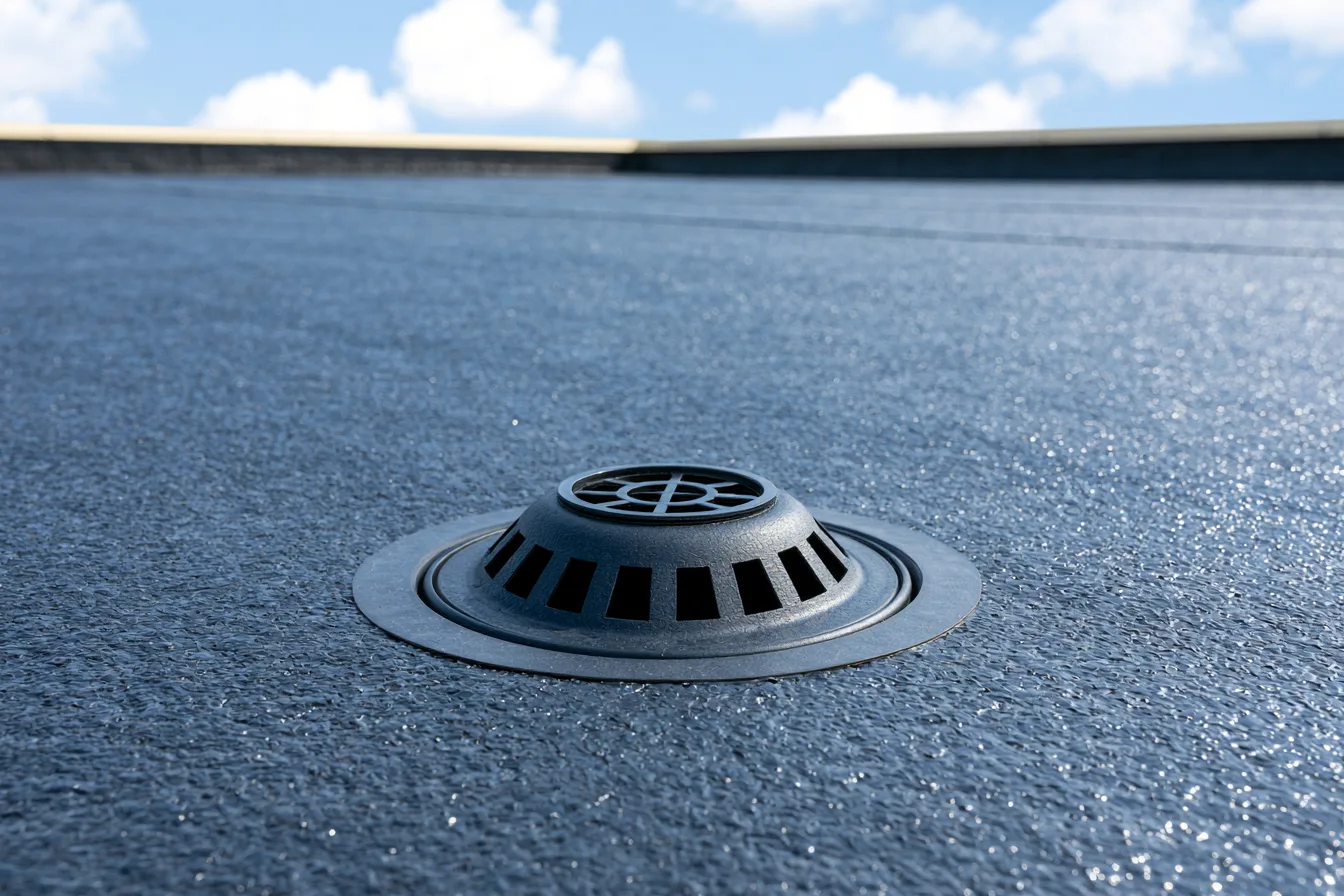
The Drain Connection Is Part of the Roof
The point where roofing meets the drain needs to remain watertight while allowing water to leave. A blocked outlet can cause overflow, while a failed membrane connection can leak even when the outlet is clear. Each condition needs its own correction.
Equipment curbs and penetrations introduce other changes in plane. The repair has to use details compatible with the identified roof system. TPO uses welded seams, while EPDM uses its own splice and flashing methods. Treating every flat roof as the same material can leave an unreliable repair.
Plan the Repair Around the Building
An occupied commercial building adds practical constraints to the roof work. Deliveries, tenant entrances, sensitive stock and rooftop equipment service need to be considered with the repair zone and material-handling route. Those details help the work fit the building’s operations.
If the roof problem is localized, a compatible repair to sound, dry roofing can be useful. Wider moisture, damaged support or unsuitable construction can change the scope toward replacement. Coating restoration belongs only on an eligible, prepared substrate after the underlying problems have been resolved.
Tell us the building location, where the water appears and any access restrictions you already know. You do not need to diagnose the membrane first. Discuss the commercial roof with Lenexa Roofing Co